Blog

Jan 21, 2026
Factors Affecting the Pipe Blank Manufacturing Process
1. Selection of Raw Materials
First, the performance of the raw materials must meet the requirements of the finished product, especially in terms of airtightness and impact resistance; secondly, the processing performance of the raw materials must meet the requirements of the blow molding process.
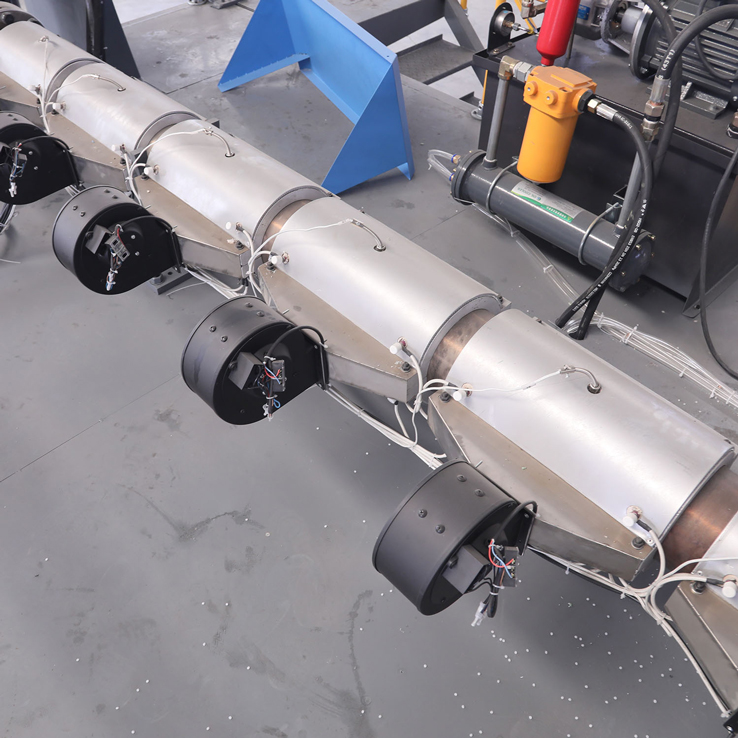
2. Temperature Control
The accuracy of temperature control during the extrusion of pipe blanks has a significant impact on the quality of the pipe blanks. For example, if the temperature is too low, the surface of the parison will be rough; if the temperature is too high, the surface will be glossy, but sagging will be severe. When extruding resins that are prone to thermal degradation, such as polyvinyl chloride, it is also necessary to control the temperature to prevent it from exceeding the degradation temperature. Our Yi Sunda machines can control the temperature very well.
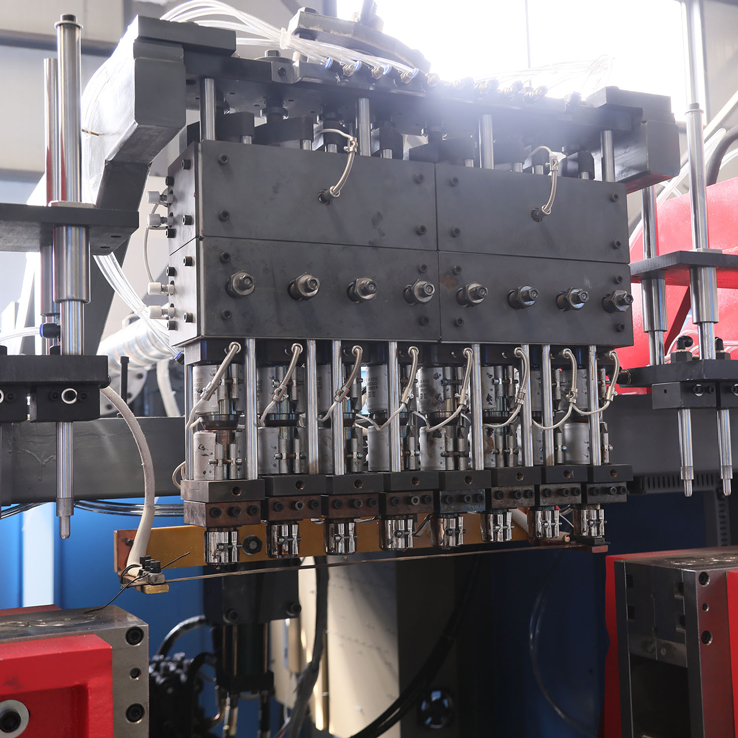
3. The effect of screw speed on extruded pipe blanks
Screw speed is an important factor affecting the quality of pipe blanks. High extrusion speeds can increase production and reduce sagging of the parison, but the surface quality of the parison deteriorates.
4. Influence of the die on the extruded tube blank
The die is a crucial device that determines the size and shape of the tube blank. Therefore, its inner surface finish should reach level 10, and its dimensions must be machined according to the design requirements. The length of the die's shaping section can generally be selected as eight times the gap between the die and the mandrel.
Factors influencing the blow molding process
1. Blowing Pressure
In blow molding, compressed air has two functions: first, to expand the parison and press it against the mold cavity wall to form the desired shape; second, to provide cooling.
2. Inflation Speed
To shorten the blowing time and facilitate the production of products with more uniform thickness and better surface quality, the inflation speed (the volume of air flowing per unit time) should be as high as possible. However, it should not be excessively high, otherwise it will have adverse effects on the product.
3. Blow-up Ratio
The blow-up ratio refers to the expansion multiple of the parison. When the size and quality of the parison are constant, the blow-up ratio varies with the size of the product.
4. Mold Temperature
To ensure product quality, the mold temperature should be evenly distributed, and the mold temperature is generally maintained at 20-50°C.
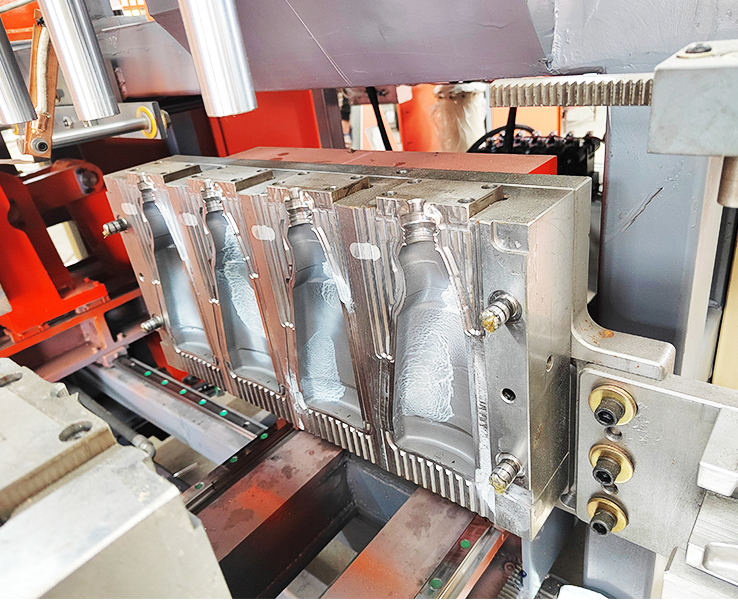
5. Cooling Time
After the parison is blown, it should be cooled. The cooling time controls the appearance, performance, and production efficiency of the product. Increasing the cooling time prevents deformation caused by elastic recovery of the plastic, resulting in a regular shape and good surface quality. Generally, the cooling rate is accelerated to improve production efficiency while ensuring that the product is fully cooled and shaped.
Summary: Advantages of extrusion blow molding: suitable for a variety of plastics; high production efficiency; relatively uniform parison temperature; capable of producing large containers; low equipment investment.