
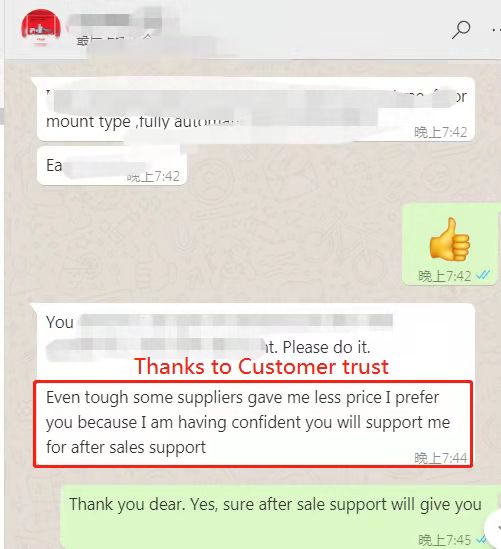
Several months ago, a client purchased a rotary blow molding machine from us for the production of dropper bottles. After the equipment arrived, I followed up on the installation and commissioning process to ensure the client could successfully start their production line. Initial operation went smoothly, and the client was satisfied with the machine's performance.
About a month later, the client contacted me, reporting problems with uneven wall thickness in the finished products and unstable mold heating, which affected production. This was the first time the client had encountered such problems, and they were very anxious to resume production as quickly as possible. As a salesperson, I realized that this not only affected the equipment's performance but also impacted the client's trust in us.
Upon receiving the feedback, I immediately contacted our company's after-sales engineers and coordinated a phone diagnostic session that same day. During the call, I assisted the engineers in conducting a comprehensive inspection of the machine, understanding the client's raw materials, operating procedures, and production batches. Through careful troubleshooting, we discovered that the problem stemmed from loose wiring in the mold heating system, leading to unstable temperatures and consequently affecting the uniformity of the bottle wall thickness.
After the repair was completed, I also demonstrated daily inspection and maintenance methods to the client via phone and explained the details to pay attention to during operation, helping them develop a preventative maintenance mindset. Throughout the entire process, I maintained communication with the client, keeping them informed of the progress and solutions, ensuring that the problem was resolved quickly and transparently.

Oct 08, 2026
How to Choose Blow Molding Machine Clamp Force for Your Container Size? For an extrusion blow molding machine, clamp force should be selected according to the container’s projected area, internal blowing pressure, mold design, material behavior, and safety margin—not simply the container volume. Learn More >Oct 08, 2026
Ultimate Guide to Bottle Blowing Machines for Beverage Production A bottle blowing machine turns plastic resin into the hollow containers that hold water, soft drinks, juice, and edible oil. Getting this machine right matters more than most first-time buyers expect, because it sets the ceiling for your entire line's throughput and fixes your unit cost for a decade or more. Learn More >Oct 05, 2026
What Should Operator Training Cover for an Automatic Blow Molding Machine? When I design automatic blow molding machine operator training, I cover more than machine buttons and production speed. A complete program must teach safety, machine anatomy, material handling, startup and shutdown procedures, parameter control, quality inspection, troubleshooting, preventive maintenance, changeover, emergency response, and documented qualification. Operators should understand Learn More >Oct 02, 2026
Mold Changeover on Automatic Blow Molding Machines: Steps Before Restarting Production I treat mold changeover as a controlled restart process, not simply a mold replacement task. Mold Changeover on Automatic Blow Molding Machines: Steps Before Restarting Production requires seven controls: isolate the machine, remove and install the mold, reconnect utilities, verify the recipe, complete a dry cycle, inspect trial parts, and approve stable production. This sequence protects Learn More >Oct 01, 2026
What Bottle Samples and Drawings Should You Provide Before a Machine Trial? Before arranging a machine trial, I recommend providing representative physical bottles, controlled technical drawings, closures, labels, production materials, target output, line-interface details, and written acceptance criteria. The supplier should receive enough information to evaluate bottle handling, filling, capping, labeling, orientation, transfer, and rejection performance under Learn More >Sep 24, 2026
How to Prepare Your Factory for Automatic Blow Molding Machine Installation Preparing a factory correctly reduces installation delays, rigging risks, commissioning problems, and unplanned production downtime. In this guide, I explain How to Prepare Your Factory for Automatic Blow Molding Machine Installation, from reviewing supplier drawings to completing utility tests, machine leveling, operator training, and production acceptance. The process applies to manufacturers Learn More >