Sep 22, 2026
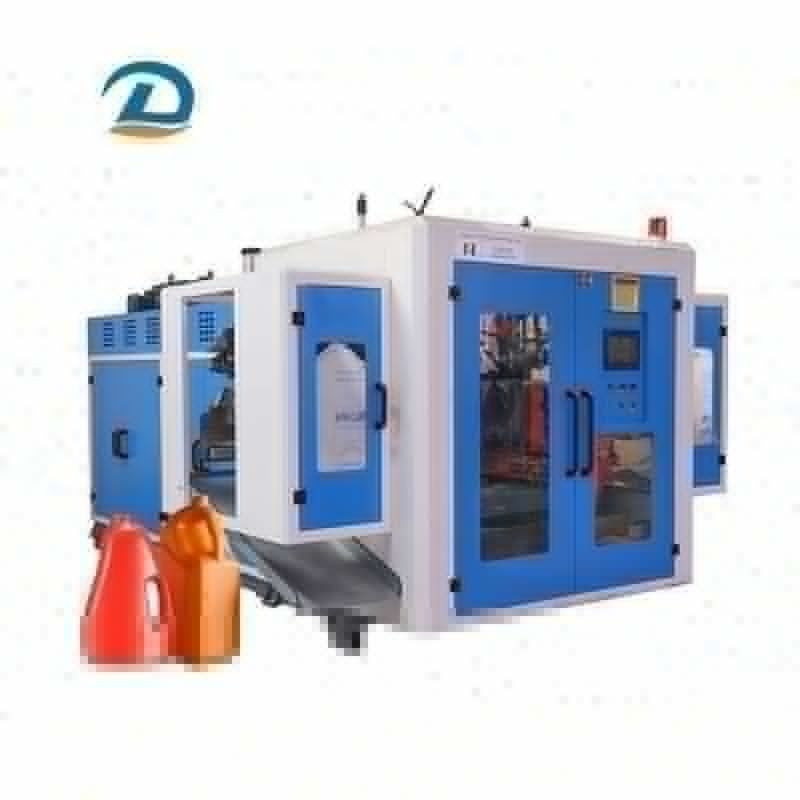
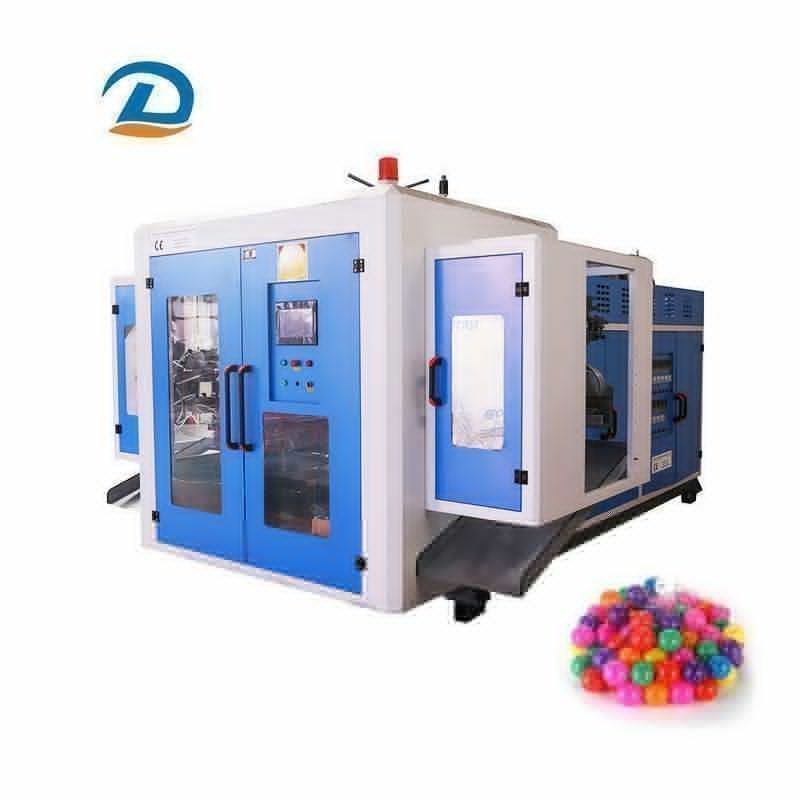
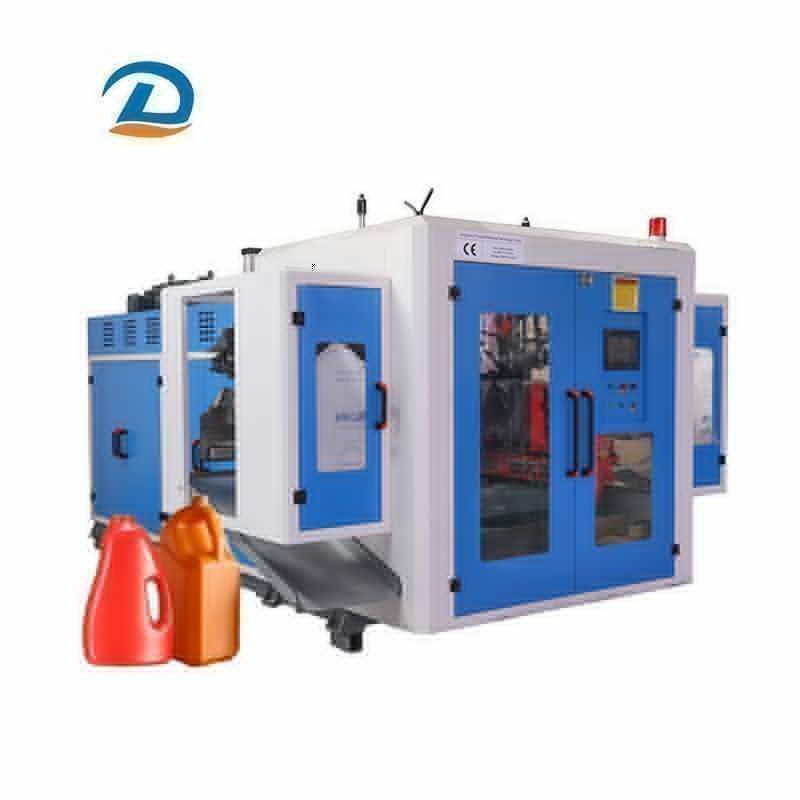
A blow molding machine should be selected from the required finished-product output, not from the machine’s advertised maximum speed alone. For procurement, buyers need to connect bottle weight, cavities, cycle time, extrusion output, material, and expected operating hours; for example, Yi Sunda lists the YSD-PY2L at up to 40 kg/h HDPE extrusion output and the YSD-PY20L at 65 kg/h, while the actual number of finished bottles depends on the product and molding cycle.
The first number a buyer should calculate is the required finished products per hour, rather than simply asking a supplier for a machine with a certain “PC/h” rating.
A practical calculation is:
Required hourly output = required annual or daily quantity ÷ effective production hours
For example, if a factory needs 600,000 bottles per month and plans to operate 25 days per month with two 8-hour shifts, the nominal requirement is:
600,000 ÷ (25 × 16) = 1,500 bottles/hour
However, 1,500 bottles/hour should not automatically become the machine's quoted capacity. Planned maintenance, mold changes, material changes, startup scrap, quality inspection and unplanned downtime reduce the effective production time.
A supplier can make a more meaningful machine recommendation when the RFQ includes:
| Parameter | Example buyer input |
|---|---|
| Product type | HDPE detergent bottle |
| Product volume | 1 L |
| Product weight | 45 g |
| Required output | 1,500 pcs/h |
| Material | HDPE |
| Number of cavities | To be proposed |
| Production schedule | 16 h/day |
| Mold change frequency | 1–2 times/day |
| Automation | Automatic |
| Required wall-thickness control | Depending on bottle design |
The important point is that container volume and product weight are different purchasing parameters. Two 1 L bottles can require different machine configurations if their weights, neck designs, handles or wall-thickness requirements differ.
For a single mold cavity, the theoretical hourly output can be estimated as:
Theoretical output = 3,600 ÷ cycle time in seconds
If one cavity requires a 12-second cycle:
3,600 ÷ 12 = 300 pcs/h
For multiple cavities:
Theoretical output = 3,600 × number of cavities ÷ cycle time
For example, a four-cavity mold with a 12-second cycle gives:
3,600 × 4 ÷ 12 = 1,200 pcs/h
This is a theoretical calculation. Actual production can be lower because the machine may lose time during mold opening, trimming, take-out, cooling, material feeding, adjustments and quality checks.
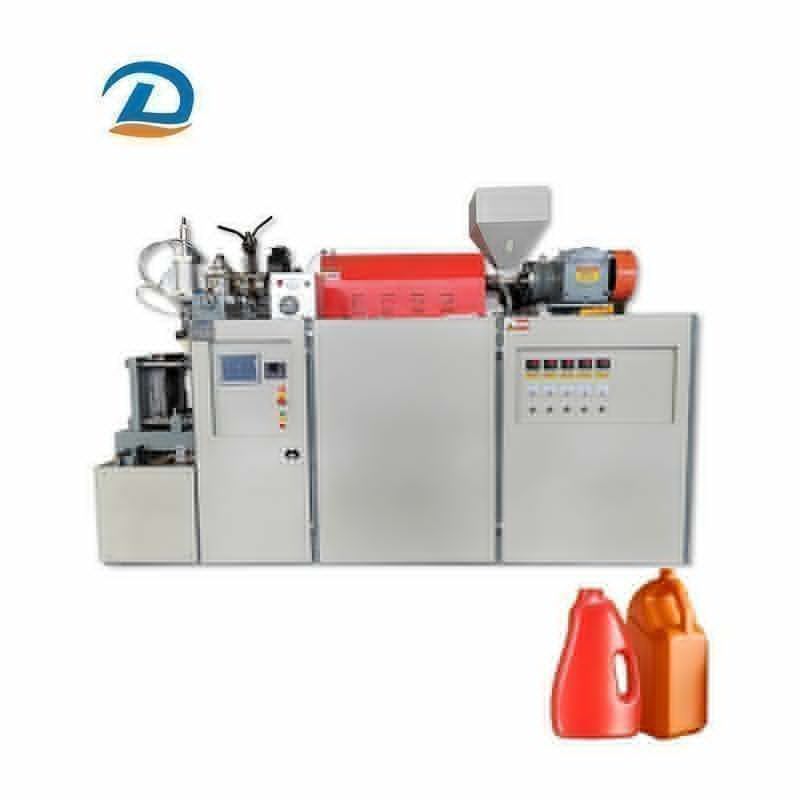
Yi Sunda's published machine data illustrates why buyers should compare the entire specification, rather than one output figure. Its YSD-PY2L lists 150–300 pcs/h, a maximum product volume of 2 L, and up to 40 kg/h HDPE extrusion rate.
The answer is that PC/h is only one part of production capacity.
The following variables can change practical output:
For example, Yi Sunda's YSD-XZQ-8 rotary machine is listed with 8 molds and 4,800 pcs/h production capacity, together with 25 kg/h maximum HDPE output. This shows why cavity count and extrusion throughput need to be evaluated together when comparing machine configurations.
Neither parameter should be considered independently. Pieces per hour tells the buyer how many finished products the machine can theoretically produce, while extrusion output in kg/h indicates whether the extruder can continuously supply enough material.
A useful material-based calculation is:
Material demand per hour = product weight × pieces per hour ÷ 1,000
For a 50 g bottle at 1,500 pcs/h:
50 × 1,500 ÷ 1,000 = 75 kg/h
That means the theoretical product material requirement alone is 75 kg/h, before accounting for flash, startup scrap, trimming losses or other process losses.
If the selected machine has an extrusion capacity below the required material throughput, the machine cannot maintain the target production rate simply by increasing the number of cavities.
An undersized extrusion system can become a production bottleneck. Increasing the nominal machine speed does not solve the problem if the extruder cannot supply the required melt volume consistently.
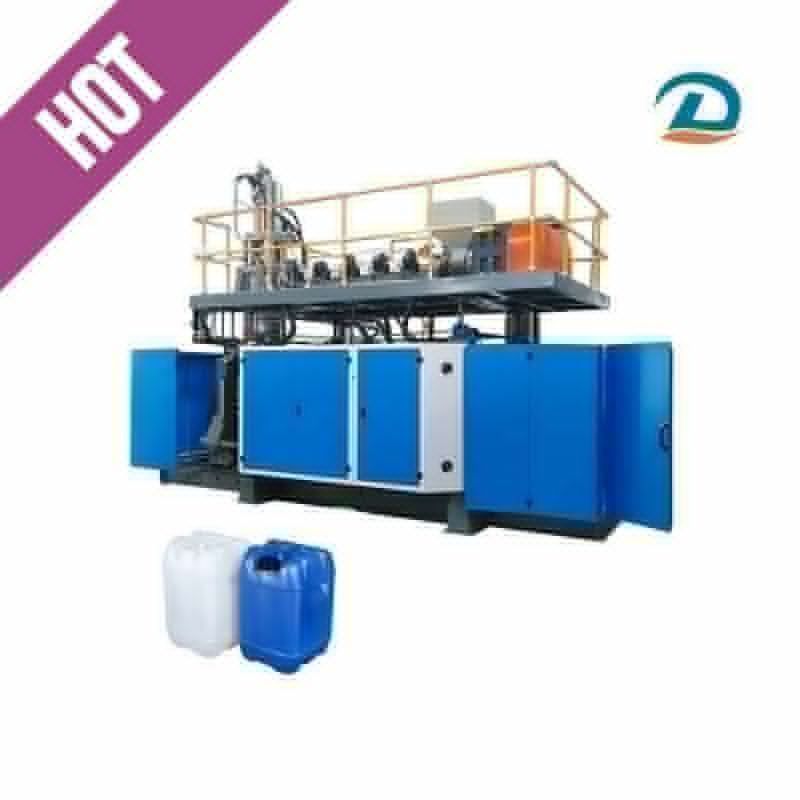
This is particularly important for heavier containers and large hollow products. For example, Yi Sunda lists the YSD-PY20L with 65 kg/h maximum HDPE output, while its published parameters also include 100-point thickness control, a 0.4–0.6 MPa blowing pressure range, and 50 kW total power.
For procurement, these figures should be checked against the actual bottle weight and target output rather than evaluated separately.
A capacity comparison becomes clearer when converted into kilograms of finished product per hour.
| Product weight | Target output | Finished material demand |
|---|---|---|
| 30 g | 1,500 pcs/h | 45 kg/h |
| 50 g | 1,500 pcs/h | 75 kg/h |
| 80 g | 1,500 pcs/h | 120 kg/h |
| 100 g | 1,500 pcs/h | 150 kg/h |
The table demonstrates a common purchasing mistake: the same 1,500 pcs/h requirement does not represent the same machine load.
A 30 g bottle and a 100 g container both requiring 1,500 pcs/h have very different material throughput requirements.
Therefore, an RFQ should include both:
pcs/h + product weight in grams
rather than specifying only the desired number of bottles per hour.
Wall-thickness control becomes particularly important when the container has handles, shoulders, corners, deep sections, heavy-duty requirements or strict weight targets.
Research published in the Journal of Materials Processing Technology describes parison-thickness optimization as a way to achieve the required final wall-thickness distribution while reducing unnecessary material use.
Yi Sunda's published equipment specifications include machines with 100-point axial wall-thickness control. Its YSD-PY20L, for example, specifies a 100-point thickness-control system, while its 20 L-class machine lists a maximum HDPE output of 65 kg/h.
For procurement, this does not mean that every application requires 100-point control. The appropriate configuration depends on:
A machine with a high advertised PC/h figure may still be unsuitable if its extrusion capacity, mold dimensions or product-volume range do not match the application.
For example, Yi Sunda lists the YSD-PY2L with a 2 L maximum product volume, 40 kg/h maximum HDPE extrusion rate, 150–300 pcs/h production capacity, and 21 kW total power.
A buyer planning to produce a much heavier container should therefore not select equipment simply because the advertised pieces-per-hour number appears sufficient.
The machine needs to pass several checks simultaneously:
Product size → product weight → extrusion output → mold capacity → cycle time → actual output
A practical procurement comparison should look like this:
| Parameter | Why it matters |
|---|---|
| Maximum container volume | Determines whether the product is within the machine's forming range |
| Product weight | Determines material throughput |
| Extrusion output kg/h | Determines whether the extruder can supply the required material |
| Cycle time | Determines theoretical production rate |
| Number of cavities | Directly affects pcs/h |
| Mold dimensions | Confirms mold compatibility |
| Clamping force | Must suit mold and product requirements |
| Blowing pressure | Must match the process requirement |
| Wall-thickness control | Important for weight distribution and complex geometries |
| Total power | Relevant to factory electrical planning and operating cost |
| Automation level | Affects labor and production consistency |
| Machine dimensions | Important for factory layout |
| Machine weight | Relevant to installation and logistics |
For example, the published YSD-PY50L specification includes a 50 L maximum container capacity, 60 pcs/h production capacity, 60 kg/h maximum HDPE output, 0.4–0.6 MPa blowing pressure and 40 kW total power. These parameters provide a more useful procurement picture than a single “60 pcs/h” number.
Buyers should distinguish between required capacity and rated capacity.
If a factory requires 1,500 finished bottles per hour, buying equipment rated at exactly 1,500 pcs/h leaves little room for production fluctuations. A practical quotation process should instead ask the supplier to demonstrate whether the proposed configuration can maintain the required output under the actual product weight, material, mold and quality conditions.
The margin should not be selected as an arbitrary percentage without testing. It should be evaluated against:
This is also why a machine acceptance test should use the customer's actual mold and material conditions whenever practical.
A procurement team can use the following checklist:
These questions help separate a machine's catalog capacity from the capacity that can realistically be achieved for a specific product.
There is no single parameter that determines suitability. Product volume, product weight, extrusion output, cycle time, cavities, mold dimensions and required wall-thickness distribution should be evaluated together.
Start with the required finished pieces per hour, then check the product weight and convert the requirement into kg/h. Finally, compare the result with the machine's extrusion output and verify the expected cycle time and cavity configuration.
No. A higher nominal PC/h figure does not automatically mean lower production cost or better suitability. If the machine cannot meet the required product weight, wall-thickness distribution, mold dimensions or material-processing conditions, the higher nominal output may have little practical value.
Bottle weight directly affects material throughput. For example, producing 1,500 bottles/hour at 50 g requires approximately 75 kg/h of finished material before process losses, while the same output at 30 g requires only 45 kg/h.
It depends on the product geometry and quality requirements. Simple containers may have less demanding thickness-distribution requirements, while large, complex or lightweight containers can benefit from programmable parison control; published research also links optimized parison thickness distribution with material-use reduction.
Provide the product drawing or sample, container volume, product weight, resin type, target output, mold/cavity requirements and automation preference. Yi Sunda states that it provides customized machine configurations according to bottle design, production capacity, raw materials and factory layout, together with mold customization, installation guidance, training and after-sales support.
Blow molding machine capacity should be calculated from the actual product and production target, rather than selected from a catalog PC/h number alone. For a reliable purchasing decision, compare product weight, required pcs/h, kg/h extrusion capacity, cavity number, cycle time, mold dimensions, wall-thickness control and automation as one system.
Yi Sunda publishes equipment covering different production ranges, including the YSD-PY2L at up to 40 kg/h HDPE extrusion output and larger equipment such as the YSD-PY20L at up to 65 kg/h, so the appropriate configuration should be matched to the buyer's actual product and output requirements.
For a project-specific quotation, buyers can provide the bottle drawing, weight, material and target production volume to Yi Sunda for configuration review.