Oct 08, 2026
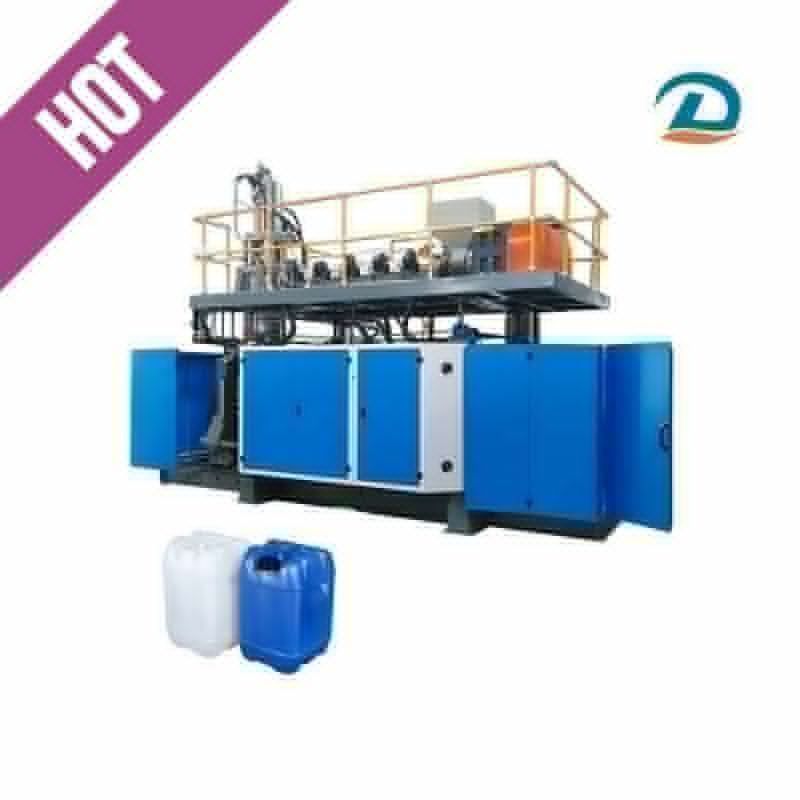
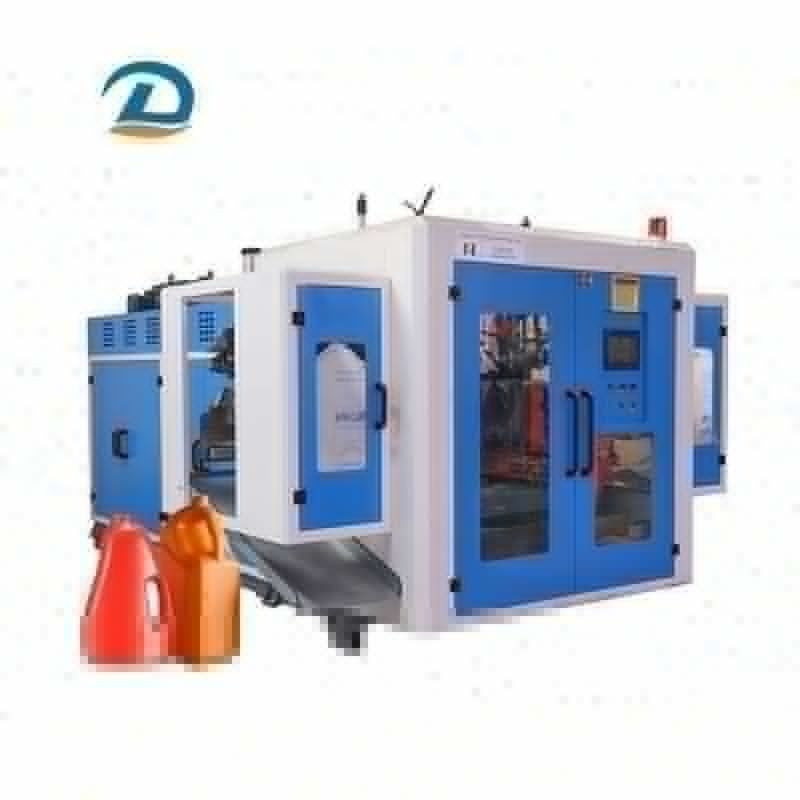
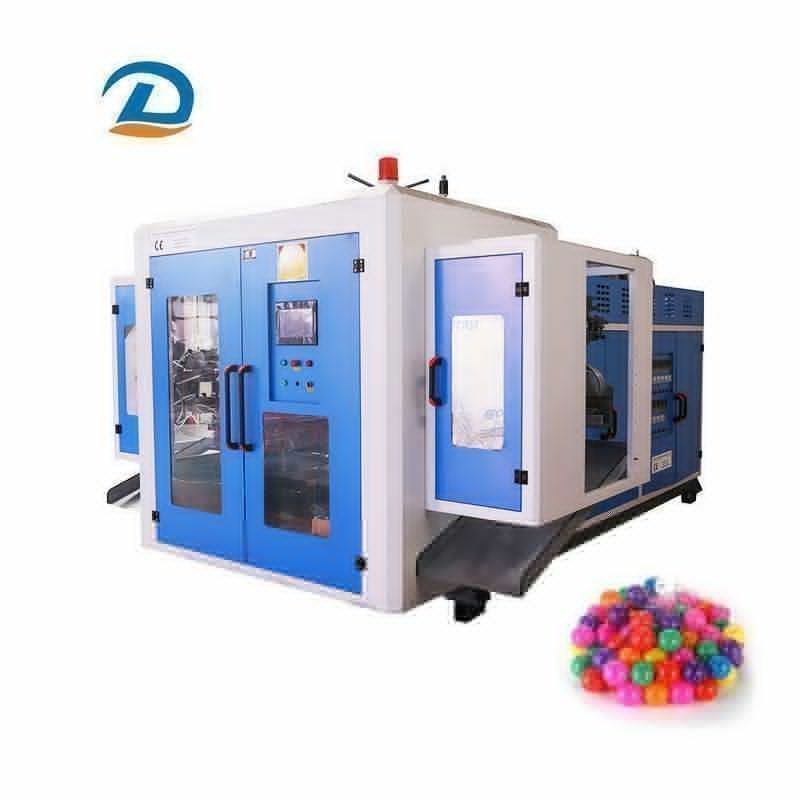
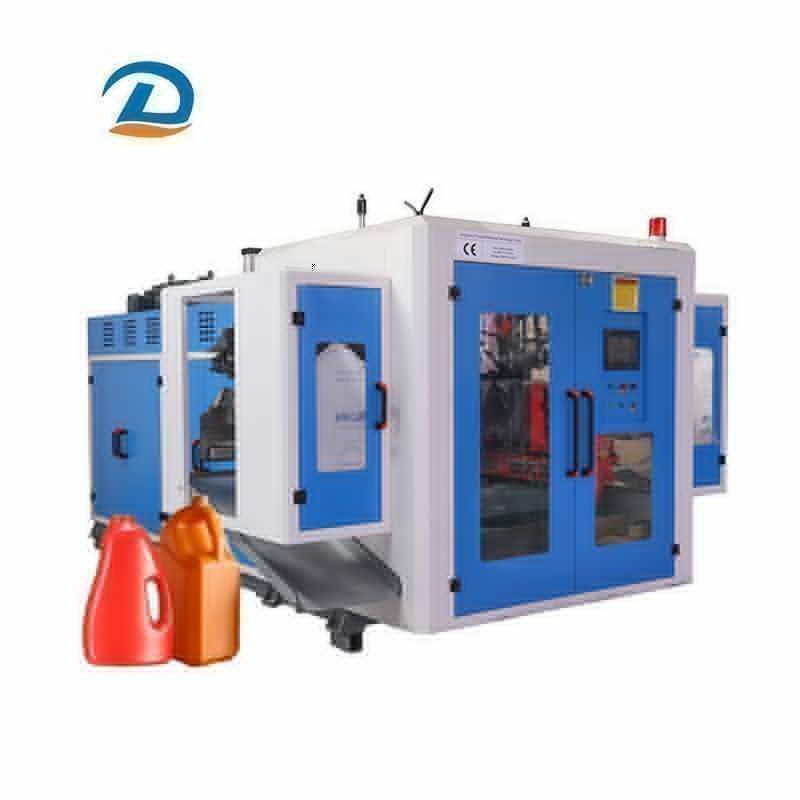
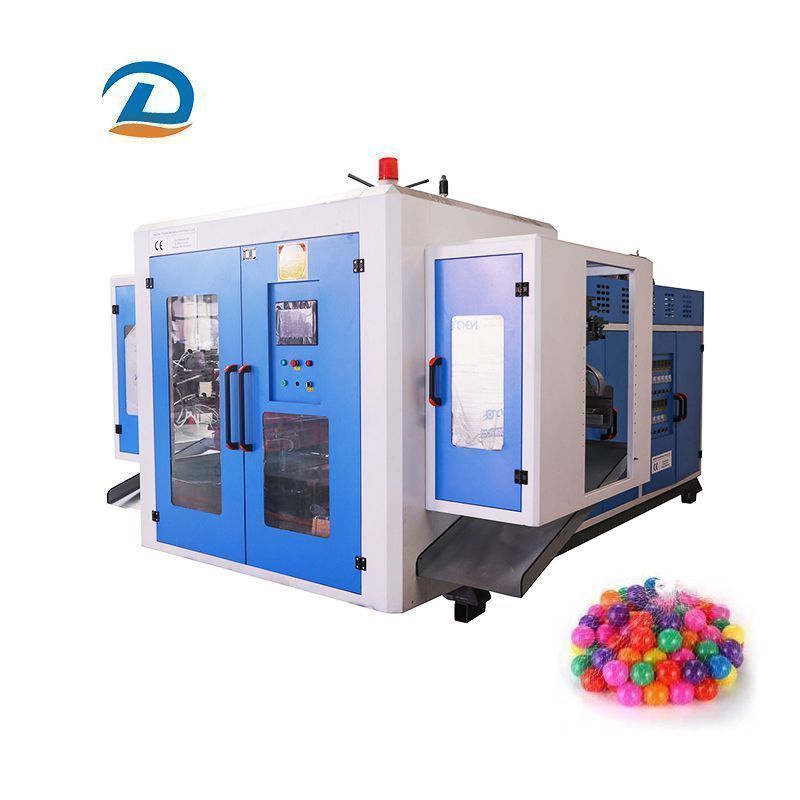
For an extrusion blow molding machine, clamp force should be selected according to the container’s projected area, internal blowing pressure, mold design, material behavior, and safety margin—not simply the container volume. A small bottle and a large container with the same material can require very different clamping conditions, while an oversized clamp system can increase machine cost without solving the actual production problem. Buyers should therefore confirm the projected area and mold requirements before comparing machine tonnage or clamp specifications.
Clamp force is one of the mechanical parameters that directly affects mold closing, flash control, mold alignment, and production stability. If the selected machine does not provide sufficient effective clamping capacity, the mold may open slightly during blowing, creating excessive flash or dimensional variation. If the machine is substantially oversized, the additional capacity may not provide a meaningful production benefit.
For distributors and plastic packaging manufacturers, clamp force should be evaluated together with container size, mold dimensions, material, output target, and future product plans.
Container volume is useful for describing the product, but it is not enough to determine the required clamp capacity.
Consider two hypothetical containers:
| Parameter | Container A | Container B |
|---|---|---|
| Nominal volume | 2 L | 2 L |
| Shape | Narrow bottle | Wide rectangular container |
| Projected area | Lower | Higher |
| Mold cavity footprint | Smaller | Larger |
| Required clamp capacity | Potentially lower | Potentially higher |
Both products have the same nominal volume, but the second container may present a substantially larger projected area to the mold.
During the blowing process, internal pressure acts against the mold cavity. The machine's clamping system must resist the resulting separating force and maintain the mold in the required position.
Therefore, a buyer should provide the actual bottle or container drawing instead of asking for a machine based only on liters.
Projected area is the area of the product and cavity exposed to the separating force in the relevant direction.
A simplified engineering relationship is:
Separating force ≈ internal pressure × projected area
The actual machine-selection calculation is more complex because mold construction, pressure conditions, material behavior, machine geometry, and safety factors also need to be considered.
The practical purchasing lesson is simple: larger projected area generally increases the required clamping capacity even when product volume remains unchanged.
This is particularly important for:
Wide-mouth containers
Flat-sided bottles
Jerry cans
Large chemical containers
Industrial drums
Wide rectangular packaging
Large hollow products
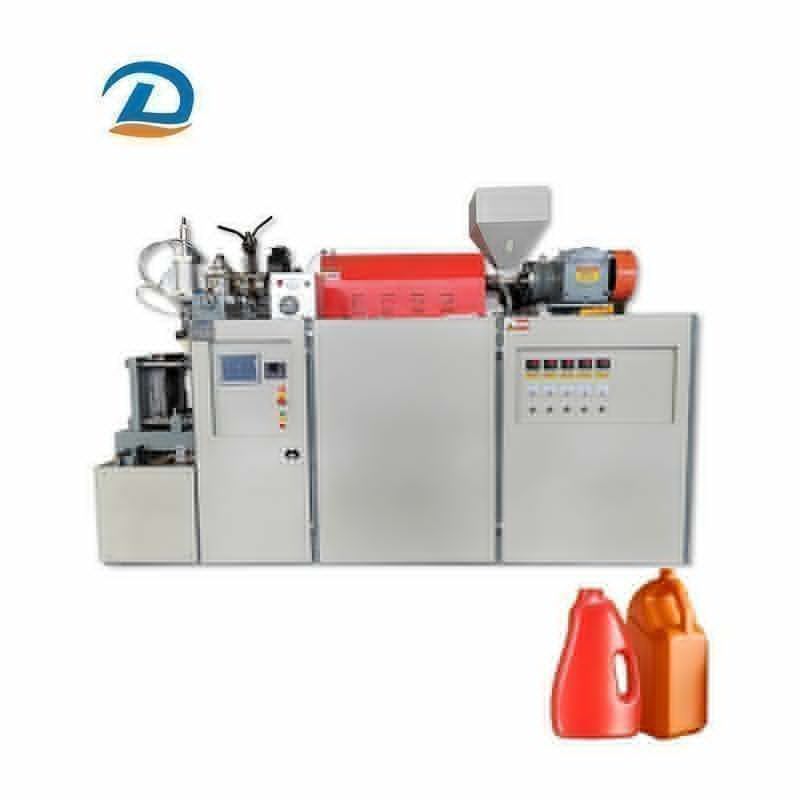
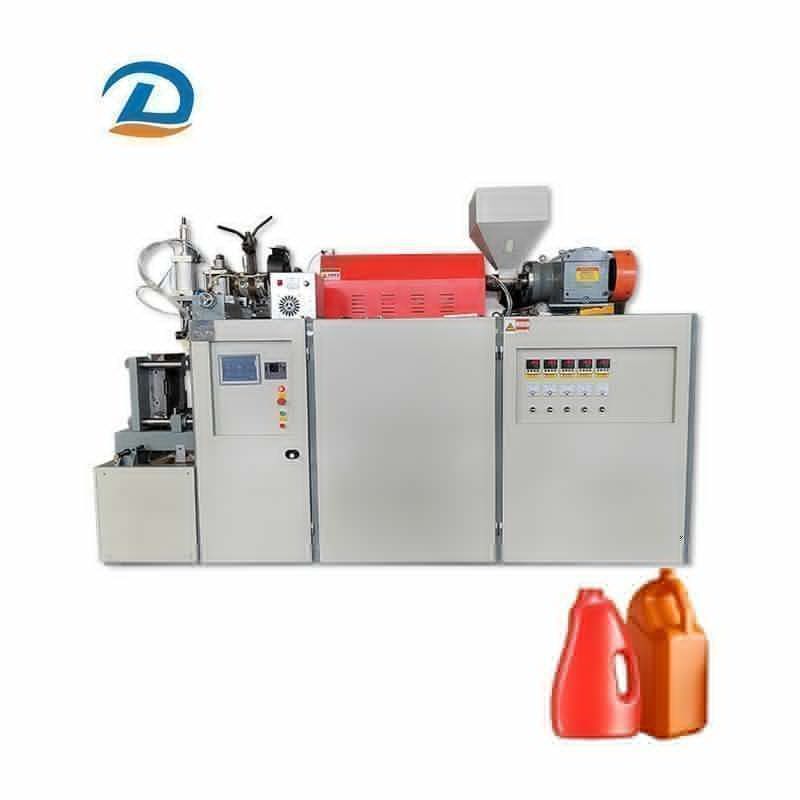
Yi Sunda supplies equipment for products ranging from small containers to large hollow products, so the appropriate machine should be matched to the actual product design rather than selected from capacity alone.
For a project requiring a specific machine recommendation, buyers can review the Yi Sunda blow molding machine product range and provide the product drawing for technical evaluation.
A useful RFQ should contain more information than "I need a 5-liter bottle machine."
At minimum, provide:
| Parameter | Recommended information |
|---|---|
| Product volume | Actual nominal volume |
| Product dimensions | Length × width × height |
| Product drawing | 2D or 3D drawing if available |
| Material | HDPE, LDPE, PP, etc. |
| Product weight | Target weight in grams |
| Mold cavities | Number of cavities |
| Mold dimensions | Length × width × height |
| Target output | Pieces/hour or pieces/day |
| Flash requirements | Standard or tight flash control |
| Future products | Similar products planned for the same machine |
| Automation | Semi-automatic or automatic |
| Special requirements | Handle, wide mouth, multilayer, special shape, etc. |
The product drawing is particularly valuable because it allows the manufacturer to evaluate projected area, neck configuration, mold layout, and machine compatibility.
Clamp force is only one part of the mold-machine interface.
The mold must physically fit the machine's mold space, including:
Mold width
Mold height
Mold thickness
Mold opening stroke
Tie-bar or platen clearance where applicable
Blow pin position
Parison position
Cooling connections
Product take-out space
A machine can theoretically provide enough clamping capacity but still be unsuitable if the mold cannot be installed correctly.
This is why buyers should not compare machines solely by "tons."
A better comparison includes both the effective clamping capability and the available mold installation envelope.
Sometimes, but only when the future product plan is reasonably defined.
For example, a manufacturer currently producing a narrow 1-liter bottle may plan to add a wider 5-liter jerry can next year. Choosing a machine with additional mold-space and clamping capacity could make sense if the planned product is technically compatible with the same machine architecture.
However, buying a much larger machine solely because "we may need it someday" can tie up capital and increase energy and maintenance costs.
A useful decision framework is:
| Situation | Procurement approach |
|---|---|
| One stable small product | Size closely to the actual product |
| Several similar products | Allow reasonable mold flexibility |
| Product range expected to expand | Consider future mold dimensions |
| Large product planned soon | Size around the actual future product |
| Future products undefined | Avoid excessive oversizing |
| Contract manufacturer with many SKUs | Prioritize mold flexibility and changeover practicality |
The future-product argument should therefore be based on actual product plans, not a general preference for larger machines.
Insufficient clamping capacity can create several production problems.
When the mold is not adequately held closed during the blowing stage, material can escape at the mold parting line.
Flash increases trimming requirements and can reduce product appearance.
If mold closure is not sufficiently stable, the finished container may show inconsistent dimensions or parting-line defects.
Repeated mechanical stress can affect mold surfaces, clamping components, or alignment systems.
A machine may technically produce the product but generate too many defective pieces to meet the buyer's commercial target.
This is why a machine should not be evaluated only on whether it can "make" the bottle. The relevant question is whether it can produce the required product consistently at the planned production rate.
Yes.
Higher capacity is not automatically better.
An oversized machine can lead to:
Higher initial equipment investment
Larger factory footprint
Potentially higher utility requirements
Greater mechanical capacity than the product needs
More difficult economic justification for low-volume products
The correct objective is not maximum clamp force but adequate capacity with suitable machine compatibility and production economics.
For a manufacturer producing multiple products, the best choice may be a machine that provides enough mold flexibility rather than the machine with the highest nominal tonnage.
Increasing cavity count can change the total projected area presented to the clamping system.
For example, a two-cavity mold may have approximately twice the product projected area of a single-cavity mold, although the actual mold layout and geometry must be evaluated.
| Mold configuration | Main benefit | Procurement consideration |
|---|---|---|
| Single cavity | Simpler tooling and lower initial mold complexity | Lower output per cycle |
| Two cavities | Higher output per cycle | Larger mold/projected area |
| Multiple cavities | Higher theoretical output | Requires appropriate machine and mold capacity |
Buyers should therefore avoid choosing cavity count independently from the machine.
If the production target is 2,000 bottles/hour, a two-cavity configuration may require a different machine cycle and mold arrangement from a four-cavity solution. The supplier should evaluate the entire production system.
Instead of comparing only machine price and nominal clamp force, use a technical comparison table.
| Specification | Machine A | Machine B |
|---|---|---|
| Effective clamp capacity | Confirm | Confirm |
| Mold dimensions | Confirm | Confirm |
| Maximum mold opening | Confirm | Confirm |
| Product volume range | Confirm | Confirm |
| Screw diameter | Confirm | Confirm |
| Extrusion capacity | Confirm | Confirm |
| Die-head configuration | Confirm | Confirm |
| Product material | Confirm | Confirm |
| Number of cavities | Confirm | Confirm |
| Target output | Confirm | Confirm |
| Automation level | Confirm | Confirm |
| Power requirement | Confirm | Confirm |
| Mold compatibility | Confirm | Confirm |
| After-sales support | Confirm | Confirm |
This comparison makes it easier to identify whether a lower-priced machine is actually equivalent to a more expensive quotation.
A compatibility review is particularly useful when:
The buyer already owns molds.
The mold is supplied by a third party.
The product has an unusual shape.
Multiple cavities are required.
The product has a large projected area.
The buyer wants to use one machine for several products.
A large hollow container is being developed.
Tight flash or dimensional requirements apply.
For these projects, provide the mold drawing together with the product drawing.
Yi Sunda states that its engineering team provides customized blow molding solutions according to product requirements and factory conditions, and its manufacturing process includes testing before shipment.
For customized machine selection, buyers can also review the Yi Sunda extrusion blow molding machine range.
Neither parameter should be evaluated independently.
Clamp capacity determines whether the mold can be held properly during the blowing stage, while extrusion capacity affects whether the machine can supply the required parison volume and production cycle.
For example, a machine might have sufficient clamp capacity but insufficient extrusion output for a heavy 20-liter container at the desired cycle time.
Conversely, a machine with high extrusion output may still be unsuitable if the mold dimensions or clamping capacity are insufficient.
The machine should therefore be evaluated as a complete system:
Product → Material → Parison → Die Head → Mold → Clamp System → Cooling → Take-Out → Target Output
Before approving a machine, ask the supplier to confirm:
Whether the proposed machine is suitable for the product drawing.
Whether the existing or planned mold can be installed.
Whether the projected area is within the machine's effective clamping capability.
Whether the target output is achievable with the proposed cavity configuration.
Whether the extrusion capacity matches the product weight and cycle.
What materials are supported.
What mold dimensions are permitted.
What factory utilities are required.
What testing is performed before shipment.
What installation and after-sales support is included.
This creates a more transparent basis for comparing suppliers.
No. Container volume does not directly determine the required clamp capacity because product shape and projected area also affect separating force. The supplier should review the product dimensions and mold configuration before confirming the machine.
Not necessarily. A tall, narrow bottle and a short, wide container can have very different projected areas even when their volumes are similar.
It may be possible if the mold dimensions, opening requirements, blow-pin arrangement, cavity configuration, and machine interface are compatible. Send the mold drawing and product information to Yi Sunda for confirmation before ordering.
Only if the additional capacity corresponds to realistic future products. Oversizing a machine without a defined production need can increase capital and operating costs without improving current production.
Send the product drawing or sample, material, product weight and volume, target output, cavity quantity, mold dimensions, and expected production schedule. Yi Sunda can then evaluate the machine configuration against the actual application.
Clamp force should be treated as a product-specific engineering parameter rather than a simple machine-size label. Projected area, internal pressure, mold dimensions, cavity configuration, product material, and production requirements all influence the appropriate machine selection.
For buyers, the most reliable approach is to provide the product and mold drawings, define the required output, and ask the supplier to confirm clamp compatibility before comparing prices.
Yi Sunda's engineering team can evaluate customized blow molding requirements based on the actual product and production conditions. Buyers can send project details to manager@chinainjectionmachine.com for a machine recommendation and quotation.