
Oct 20, 2026
The stability of bottle thickness is crucial for successful production using a Plastic Bottle Blow Molding Machine. Uneven thickness can lead to weak spots in the bottle. This often results in production problems and increased costs. To address this, proper mold cooling design is necessary. A well-designed cooling system is essential for ensuring consistent thickness across each bottle. This article will explore effective methods for optimizing mold cooling to improve bottle quality and efficiency.
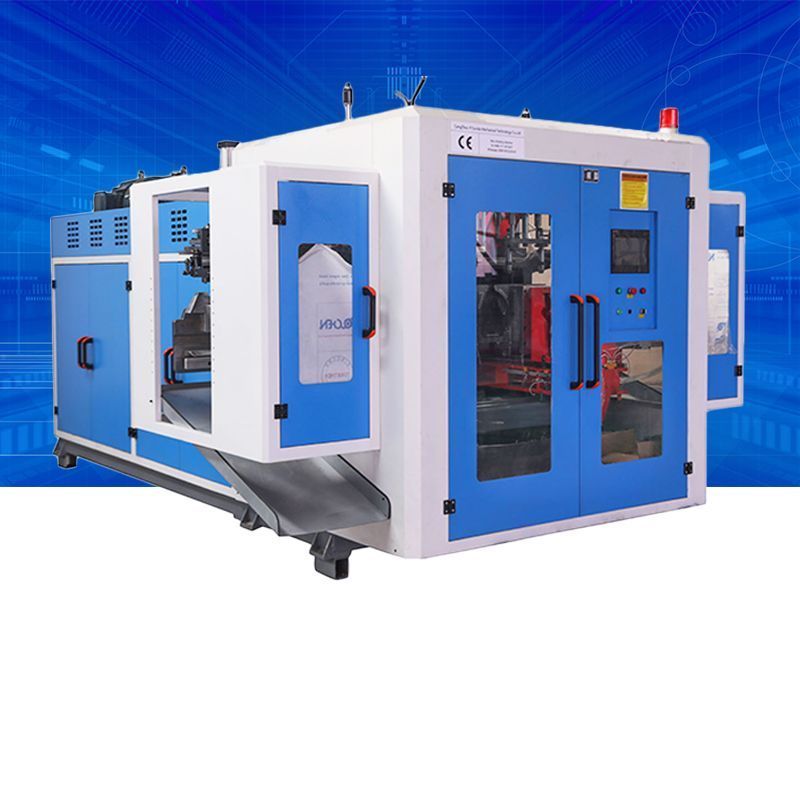
Optimizing mold cooling design is crucial for achieving stable bottle thickness and ensuring efficient production in blow molding machines.
Mold cooling directly affects the cooling rate of the plastic. Proper cooling ensures uniform thickness in bottles. If the cooling is uneven, it can lead to inconsistent product quality. Bottles may become weak or deformed. Statistical data shows that optimal cooling can improve production efficiency by up to 25%.
Here is a simplified flowchart that illustrates the cooling process in blow molding:
1. Preheat Mold 2. Inject Material 3. Allow Material to Expand 4. Initiate Cooling 5. Monitor Temperature 6. Release Finished Product| Cooling Technique | Advantages | Disadvantages |
|---|---|---|
| Water Cooling | Highly effective in heat removal | Risk of water leakage |
| Air Cooling | Cost-effective and easy to implement | Less effective than water cooling |
| Oil Cooling | Stable temperature control | Higher operating costs |
New cooling technologies are emerging. These technologies aim to improve efficiency and reduce costs. For example, the use of thermoelectric coolers is gaining attention. This method offers precise temperature control with minimal energy consumption. Industry experts predict continued advancements in cooling technology will lead to further improvements in bottle quality.
In summary, mold cooling design is vital for achieving stable bottle thickness when using a plastic bottle blow molding machine. Effective cooling reduces defects and enhances overall production efficiency. Companies like Cangzhou Yi Sunda Mechanical Technology Co.,LTD advocate for optimal cooling strategies to improve manufacturing processes and ensure high-quality products.
1. How does cooling affect bottle quality?
Cooling plays a crucial role in ensuring that bottles have consistent thickness and strength.
2. What materials are best for molds?
Molds made from materials with good thermal conductivity, like copper, are preferred.
3. How can I improve cooling efficiency?
Ensure proper design of cooling channels and maintain consistent cooling temperatures.
4. What are the common problems with uneven cooling?
Common problems include weak spots, deformations, and increased production costs.
5. Are there any new technologies in mold cooling?
Yes, thermoelectric coolers and other innovations are being developed for improved cooling efficiency.