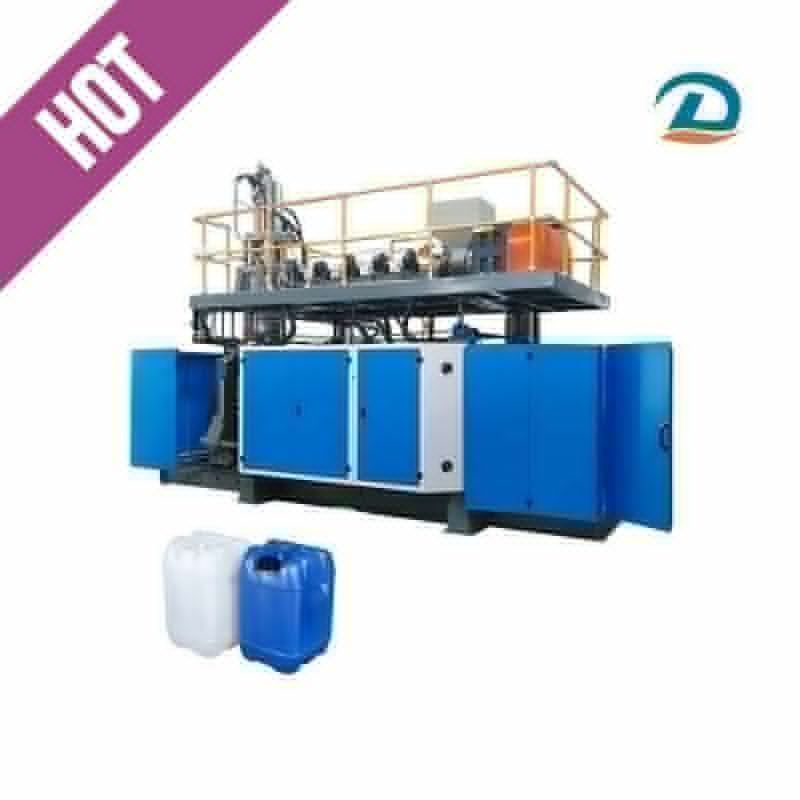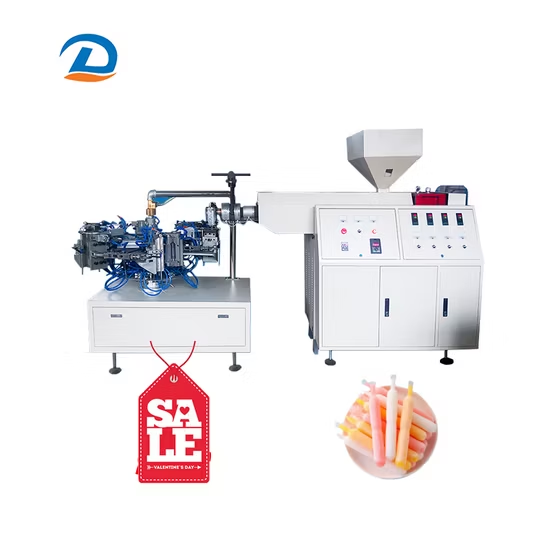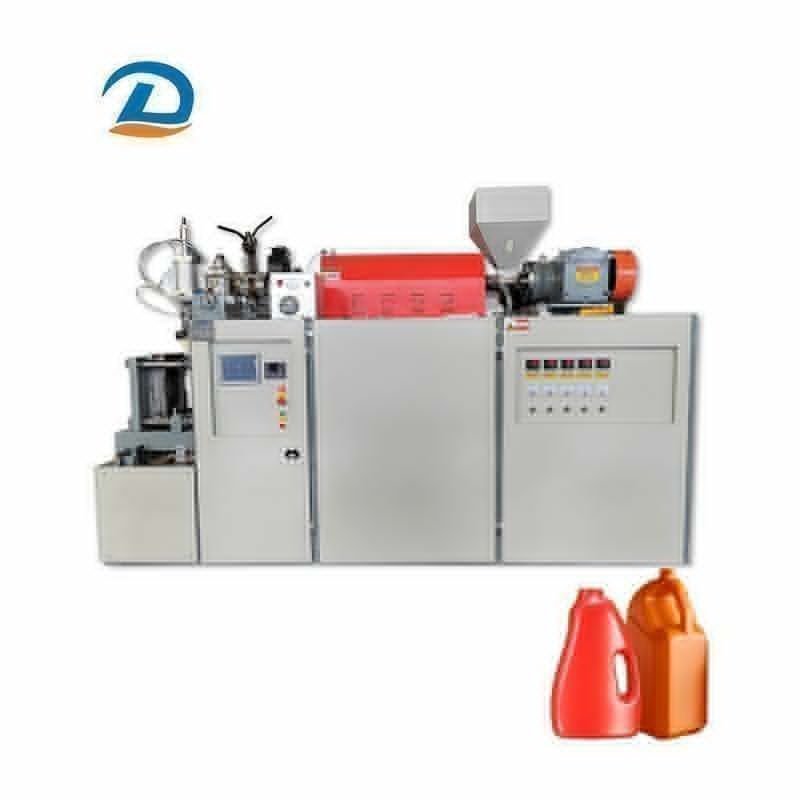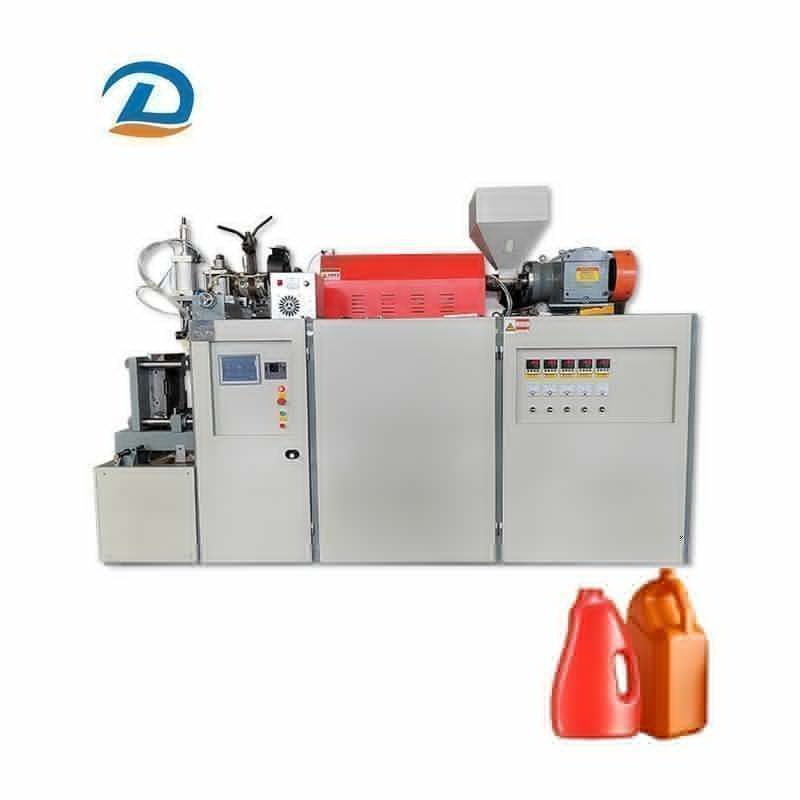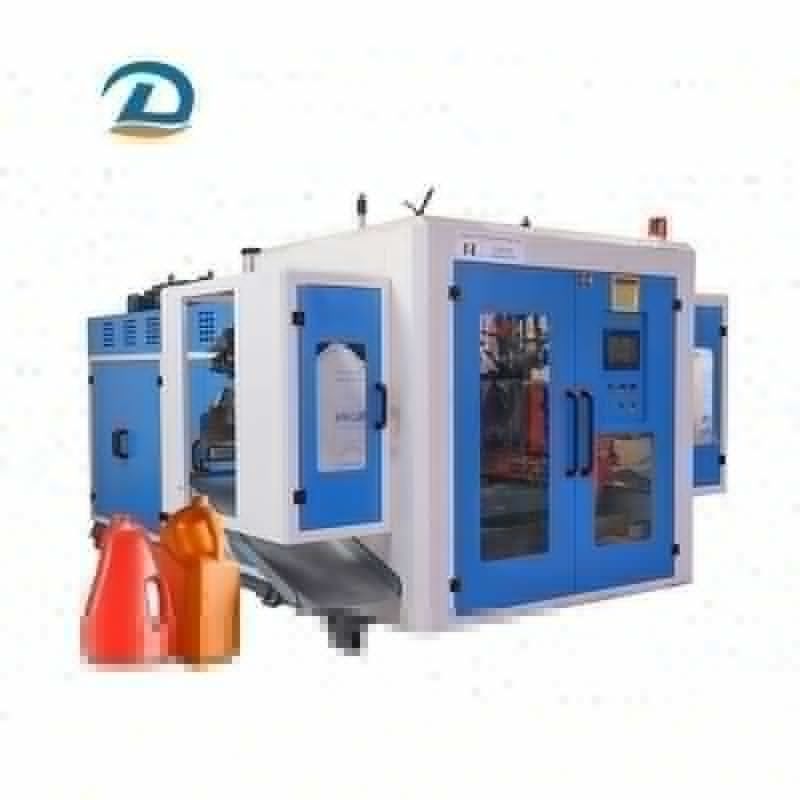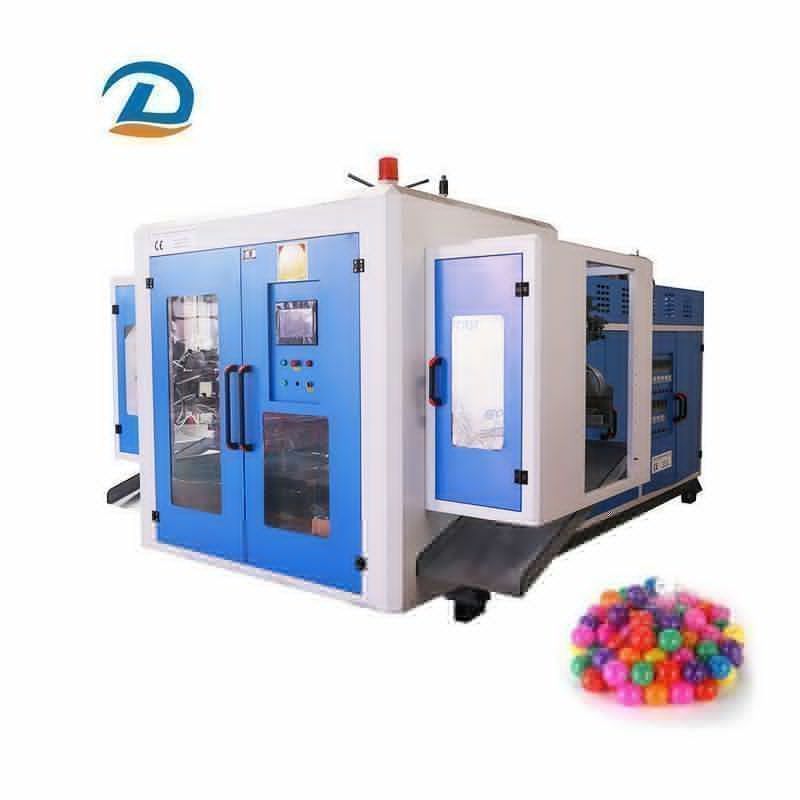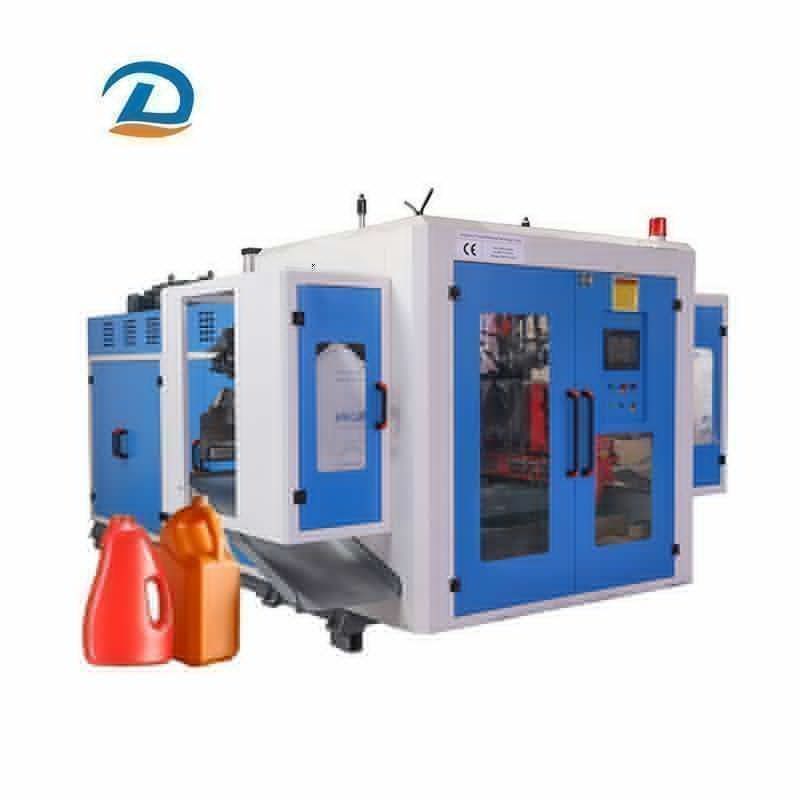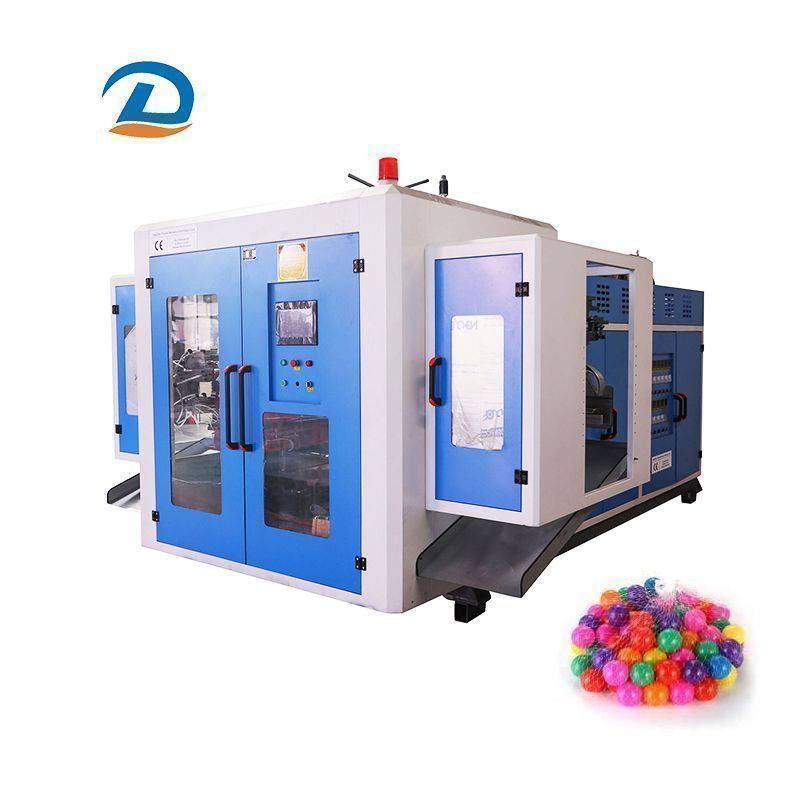
A standard monolayer HDPE bottle is an excellent container for water, milk, and household cleaners — until the product inside is an aggressive solvent, an oxygen-sensitive food, or a volatile agricultural chemical. At that point, the container wall becomes a pathway: oxygen diffuses in and degrades the product, chemical solvents migrate through the plastic and evaporate, fragrances and volatile compounds escape through the bottle wall. A multi-layer co-extrusion blow molding machine solves this by combining two to six different plastic materials into a single bottle wall during the extrusion process — each layer performing a specific function that no single material can deliver alone. The outer layers provide structural strength. The inner barrier layer — typically EVOH or nylon — blocks oxygen permeation or chemical migration. The tie layers bond incompatible materials together at the molecular level. The result is a container that performs like a complex engineered composite while looking and handling like a standard plastic bottle.
This guide provides a technical overview of multi-layer co-extrusion blow molding in 2026 — how layer structures work, which barrier materials are used for which applications, industry-specific packaging requirements, and how to specify a co-extrusion machine from Yi Sunda, a manufacturer with 20+ years of blow molding experience, 80+ country export, and 3,000+ successful machine installations.
1. The Layer-by-Layer Structure: How a 6-Layer Bottle Works
| Layer (Outside→Inside) | Typical Material | Function |
|---|---|---|
| Layer 1 — Outer Structural | HDPE or PP (virgin, colored) | Structural strength, UV protection, print surface, consumer appearance |
| Layer 2 — Tie / Adhesive | Modified polyolefin adhesive resin | Bonds the incompatible outer layer to the barrier layer |
| Layer 3 — Barrier | EVOH or Nylon/PA | Blocks oxygen permeation (EVOH) or chemical permeation (PA) |
| Layer 4 — Tie / Adhesive | Modified polyolefin adhesive resin | Bonds the barrier layer to the regrind layer |
| Layer 5 — Regrind | Recycled HDPE/PP from production scrap | Cost reduction — uses trimmed flash and rejected bottles, reducing virgin material consumption by 30-50% |
| Layer 6 — Inner Food-Contact | HDPE or PP (virgin, food-grade) | Product contact surface — must be compatible with the contents and meet food/chemical regulatory requirements |
The regrind layer (Layer 5) is a critical cost-efficiency feature unique to multi-layer blow molding. In monolayer production, trimmed flash and rejected bottles become waste. In 5-6 layer co-extrusion, this material is ground, re-pelletized, and fed into a dedicated regrind extruder — forming the middle layer of the bottle where it is encapsulated between tie layers and never contacts the product or the external environment. This reduces virgin HDPE consumption by approximately 30-50%, directly improving material cost per bottle without any compromise to barrier performance or food-contact safety.
2. Layer Configurations by Application
| Application | Recommended Layers | Typical Structure |
|---|---|---|
| Standard HDPE bottle (water, milk) | 1-layer (monolayer) | HDPE only — no barrier needed |
| Household chemicals, detergents | 2-3 layers | HDPE + regrind + HDPE — cost optimization with recycled content |
| Food sauces, edible oils, juices | 5-6 layers | HDPE/tie/EVOH/tie/regrind/HDPE — oxygen barrier extends shelf life |
| Pesticides, agrochemicals | 5-6 layers | HDPE/tie/PA(EVOH)/tie/regrind/HDPE — chemical permeation barrier |
| Industrial solvents, automotive fluids | 3-6 layers | Barrier material selection based on specific chemical compatibility |
| Pharmaceuticals, medical | 3-6 layers | Moisture barrier and oxygen barrier per pharmacopoeia requirements |
| Cosmetics, personal care | 3-5 layers | Fragrance retention barrier — prevents volatile compound loss |
3. Barrier Materials: EVOH, Nylon, and Beyond
3.1 EVOH — The Oxygen Barrier
EVOH (ethylene vinyl alcohol copolymer) is the most effective oxygen barrier material available for co-extrusion blow molding — providing 10,000 times better oxygen barrier than HDPE alone. Its critical limitation: EVOH is moisture-sensitive and loses barrier performance when exposed to high humidity. This is why EVOH is always sandwiched between HDPE layers (which provide moisture protection) with tie layers bonding both sides. In a properly engineered multi-layer structure, the EVOH layer remains dry and maintains full barrier performance throughout the product shelf life.
3.2 Nylon / PA — The Chemical Barrier
Nylon (polyamide) provides excellent resistance to chemical permeation — particularly important for pesticide bottles, solvent containers, and aggressive industrial chemical packaging. Unlike EVOH, nylon's barrier performance is less affected by humidity. It is often used as an alternative to EVOH or in combination with EVOH for dual oxygen-chemical barrier performance. Nylon also provides improved drop-impact resistance compared to pure HDPE.
3.3 Tie / Adhesive Layers — The Critical Bond
EVOH and nylon do not naturally adhere to HDPE or PP. Without tie layers — modified polyolefin resins engineered with reactive chemical groups — the multi-layer structure would delaminate, destroying barrier performance and creating visible defects. Tie layer selection must be matched to both adjacent materials: a tie resin that bonds HDPE to EVOH is different from one that bonds PP to nylon. Yi Sunda's co-extrusion systems support material-specific tie layer recommendations based on the customer's barrier and structural material choices.
4. Machine Selection: What to Consider
| Specification | Yi Sunda Capability | Selection Consideration |
|---|---|---|
| Number of Layers | 1 to 6 layers | Match to barrier requirements — more layers = more extruders, higher machine investment, but better barrier and regrind capability |
| Container Size Range | 100ml to 1,250L | Machine screw size, clamp force, and mold dimensions must match target container |
| Materials Processed | PP, PE, HDPE, PC, PVC, PETG, LDPE, ABS + barrier resins | Each extruder must be configured for its specific material's melt temperature and processing characteristics |
| Automation Level | Semi-automatic to fully automatic | Fully automatic with robotic takeout for high-volume; semi-automatic for smaller production runs or frequent product changeovers |
| Cavity Configuration | Single to 4-cavity (high-speed) | Multi-cavity multiplies output — 4-cavity produces 4 bottles simultaneously |
| Regrind Capability | Integrated regrind extruder on 5-6 layer machines | Regrind layer reduces virgin material cost by 30-50% — essential ROI factor |
5. Yi Sunda: 20+ Years of Blow Molding Machine Manufacturing
Cangzhou Yi Sunda Mechanical Technology Co., LTD has specialized in blow molding machine manufacturing since 2002 — over two decades of continuous experience in extrusion blow molding technology. The company produces machines for containers from 100ml to 1,250L across 1-6 layer co-extrusion configurations, with materials including PP, PE, HDPE, PC, PVC, PETG, LDPE, and ABS. Yi Sunda's global footprint spans 80+ countries with 3,000+ successful installations and a 100% customer recognition rate supported by 24/7 online technical support.
Why bottle manufacturers choose Yi Sunda:
-
Twenty-plus years of specialized blow molding machine manufacturing — accumulated expertise across every major container type and industry application
-
One to six layer co-extrusion capability — from standard monolayer to full 6-layer barrier packaging with integrated regrind
-
Complete container size range — 100ml small bottles to 1,250L industrial IBC tanks and large hollow products
-
Application-specific engineering — food packaging, pesticides, chemicals, lubricants, cosmetics, pharmaceuticals, stacked barrels, jerry cans, and custom shapes
-
Full project support — requirement analysis, machine specification, mold design, sample production, installation, and lifetime after-sales service
-
Proven global reliability — 3,000+ installations, clients in France, Nigeria, Brazil, Saudi Arabia, South Africa, Cambodia, Armenia, and 70+ other countries
-
Factory testing before delivery — every machine undergoes real production testing with the customer's bottle specifications before shipment
Specify Your Multi-Layer Blow Molding Machine
Contact Yi Sunda with your container specifications — size, material, barrier requirements, and target output. Our engineering team provides a layer structure recommendation, machine configuration, and complete quotation.
Email manager@chinainjectionmachine.comYi Sunda | Since 2002 | 1-6 Layer Co-Ex | 100ml–1,250L | 80+ Countries | 3,000+ Installations
6. Frequently Asked Questions
Conclusion
Multi-layer co-extrusion blow molding is not a niche technology — it is the standard manufacturing method for a growing range of packaging applications where monolayer bottles cannot meet performance requirements. The combination of structural HDPE layers for strength, EVOH or nylon barrier layers for oxygen and chemical resistance, tie layers for inter-material bonding, and regrind layers for cost efficiency creates bottles that perform at a level no single material can achieve — at a per-unit cost that is significantly lower than alternative packaging formats such as glass, metal, or multi-component laminated containers.
Yi Sunda's 20+ years of blow molding machine manufacturing, 1-6 layer co-extrusion capability, 100ml-1,250L container size range, 80+ country export experience, and 3,000+ installations provide the machine technology, application engineering, and global support infrastructure that bottle manufacturers require for multi-layer barrier packaging projects of any scale.
Start Your Multi-Layer Packaging Project
Contact Yi Sunda with your container size, target product, barrier requirements, and production volume. Receive a layer structure recommendation and machine configuration proposal.
Email manager@chinainjectionmachine.comYi Sunda | Since 2002 | 1-6 Layer Co-Ex Blow Molding | 80+ Countries