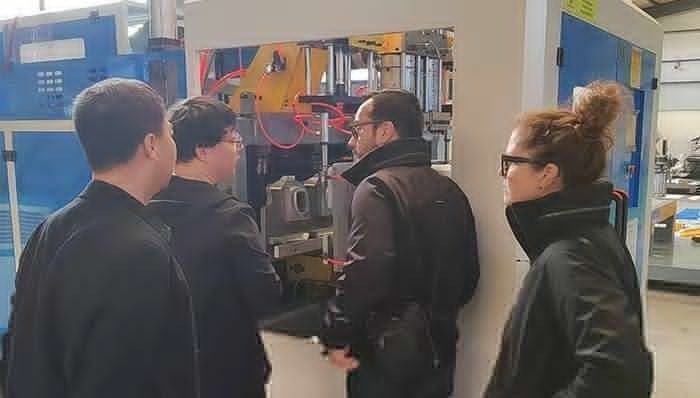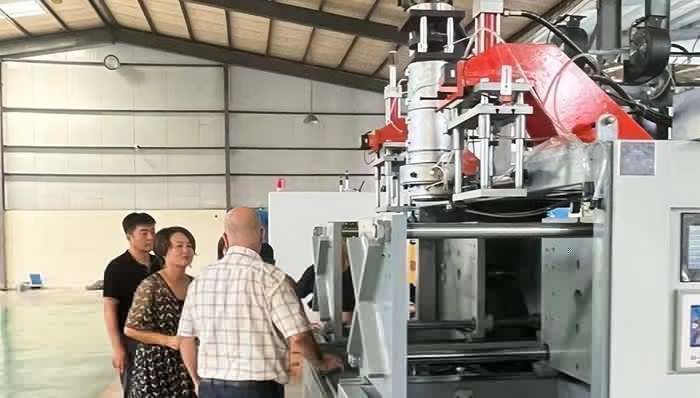
Hello! We specialize in providing efficient and reliable solutions, including technical consulting, product selection, and customized services. With an experienced team, we tailor the best solutions to your needs for smooth project execution. Contact us for professional and detailed pre-sales support!
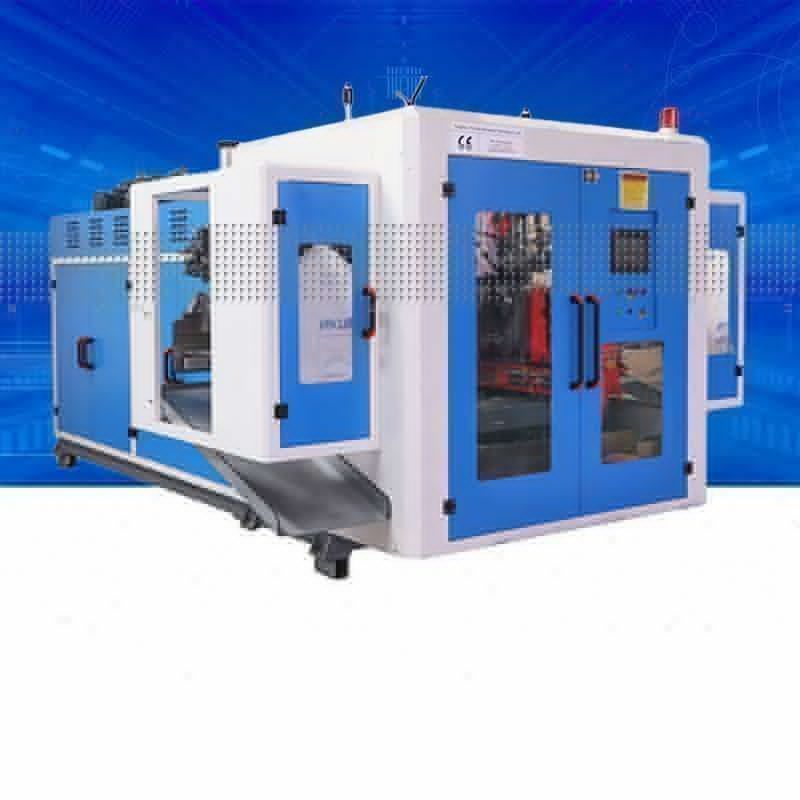
Custom blow molding machine design and engineering services focus on delivering personalized solutions tailored to unique client needs. We optimize equipment structure, control systems, and production processes to ensure efficiency, stability, and energy savings, suitable for diverse container and product manufacturing, enhancing market competitiveness.
Professional blow molding machine installation & debugging services: text descriptions + video guidance. For paid on-site installation, contact us to ensure efficient and stable operation.
We offer comprehensive after-sales support, including ample spare parts and accessories to ensure the continuous and stable operation of your equipment. Additionally, we provide 24/7 online services to promptly address technical issues and troubleshoot problems, guaranteeing you complete peace of mind.
The production speed and cycle time of a blow molding machine are influenced by several interconnected factors. The most significant is the material being processed. Different polymers (like PET, HDPE, PP) have varying melt temperatures, cooling rates, and parison formation characteristics, directly impacting how quickly a cycle can be completed. Part design and wall thickness are also crucial; larger parts with thicker walls require more time for both the extrusion of the parison and, most importantly, for cooling and solidification inside the mold. The machine's cooling system efficiency is paramount; advanced cooling channels, mold temperature controllers, and sometimes internal cooling systems can drastically reduce cycle time. Furthermore, machine specifications such as the efficiency of the hydraulic or all-electric system, the speed of the clamp unit, and the precision of the parison control system play a vital role. Finally, process parameter optimization, including extruder screw speed, blowing air pressure and timing, and mold closing speed, must be finely tuned. A minor imbalance can lead to defects, forcing a slower cycle to ensure quality. Therefore, achieving maximum speed is a balance of material science, part design, mechanical capability, and precise process engineering.
Troubleshooting common defects requires a systematic approach. For uneven wall thickness, the issue often lies with the parison (the molten plastic tube). Check and adjust the parison programming. This system controls the die head gap at different points as the parison is extruded, allowing for more material in thicker sections of the final part. Improper programming is a primary cause. Also, ensure the mandrel and die are concentric and not worn, as misalignment causes a naturally off-center parison. For weak seams (also known as weld lines), the focus should be on the "pinch-off" area of the mold. This is where the two mold halves meet and compress the parison. Causes include insufficient blow pressure or timing, which fails to force the material firmly into the pinch-off area; low parison temperature, preventing proper fusion; or contaminated material (moisture, foreign particles) hindering bonding. Additionally, inspect the mold's pinch-off blades for wear, damage, or improper design—they must be sharp and precise to cut and weld the material effectively for a strong seam.
Parison control is arguably the most critical aspect of the extrusion blow molding process, as it directly dictates the material distribution in the final product. The parison is the preform from which the part is blown, and its thickness profile is not uniform. Sophisticated Parison Programming (or Wall Thickness Control) allows operators to dynamically adjust the die gap at hundreds of points along the parison's length as it is extruded. This is essential because when the parison is inflated, different sections stretch differently; the corners and shoulders of a bottle stretch more than the sidewalls. Without precise control, the parison would have a consistent thickness, leading to very thin walls in highly stretched areas and thick, wasteful walls in others. Effective parison control ensures that the right amount of material is placed in the right area of the preform, resulting in a finished product with uniform wall thickness. This maximizes material efficiency, minimizes weight, and, most importantly, ensures the part has consistent mechanical strength, top-load resistance, and barrier properties throughout its structure, preventing failures like buckling or permeation.
The core difference lies in how the preform is made and handled. Extrusion Blow Molding (EBM) extrudes a continuous or intermittent tube of molten plastic (the parison) vertically between two mold halves. The mold closes, pinches the bottom, and the parison is inflated. EBM is ideal for complex shapes, handles, large containers (like drums), and products where the mouth (neck) does not require high precision. It is generally more flexible for part design. Injection Blow Molding (IBM) is a two-stage process. First, a precise preform (including the finished neck threads) is injection molded onto a core rod. This preform is then transferred to a blow mold where it is inflated into its final shape. IBM is superior for producing small, high-precision containers like pharmaceutical and cosmetic bottles. It offers excellent neck finish, consistent wall thickness, and no pinch-off scrap (flash), making it cleaner and more material-efficient for certain applications. Choosing the process depends on your product: Use EBM for larger, more complex, or irregular parts. Use IBM for high-volume, small-to-medium containers where neck precision, clarity, and no scrap are critical.
A rigorous and scheduled maintenance program is vital for blow molding machine uptime and longevity. Daily checks include inspecting hydraulic oil levels and for leaks, verifying air pressure for blowing and controls, and ensuring cooling water flow and temperature. Weekly tasks should involve cleaning the die head to prevent carbonized plastic buildup, checking heater bands and thermocouples for proper function, and lubricating the clamp unit's guide rails and tie bars. Monthly or quarterly maintenance is more comprehensive. This includes changing hydraulic oil and filters, checking and tightening electrical connections, inspecting the extruder screw and barrel for wear, and calibrating temperature sensors. Crucially, the mold itself requires attention; clean the cooling channels to prevent scaling, inspect and polish the cavity surface, and check pinch-off edges for damage. An annual overhaul by a qualified technician is recommended to inspect major components like the hydraulic pump, motors, and structural integrity of the machine. Adhering to this preventative schedule minimizes unplanned downtime, maintains consistent product quality, and protects your capital investment.